
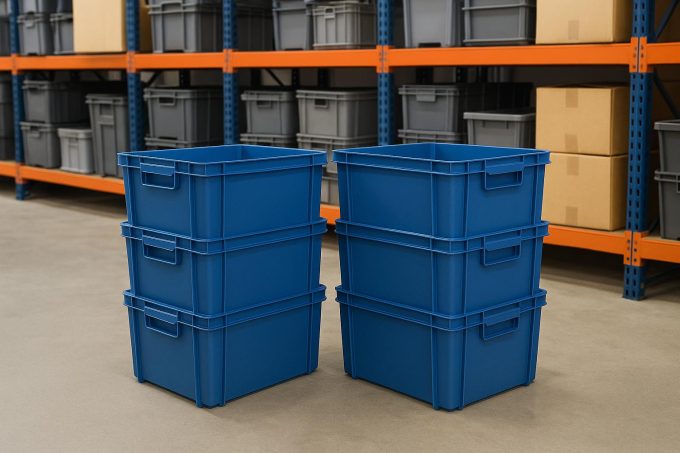
Importance of Stackable Containers in Warehouse Organization
In the contemporary logistics and storage industry, maintaining a well-organized warehouse is pivotal for achieving operational efficiency. Stackable containers have emerged as a crucial tool in realizing this objective due to their intrinsic versatility and efficiency, elements that often surpass the capabilities of traditional storage methods.
Design and Functionality
The primary aim of stackable containers is to optimize the utilization of vertical space, thereby facilitating a more efficient use of the available floor area in warehouses. By expertly employing the vertical dimension, these containers allow warehouses to significantly augment their storage capacity without the necessity of enlarging the physical footprint. The interlocking design inherent in these containers is a notable feature that ensures their stability when stacked. This design minimizes the risk of accidents, such as toppling or collapsing piles, which can otherwise disrupt warehouse operations and compromise safety. The assurance of stability is a key aspect, given the fast-paced nature of warehouse environments where the quick retrieval and storage of items are paramount.
Materials and Durability
The materials used in crafting these stackable containers are typically high-density polyethylene (HDPE) or polypropylene. Such materials offer several inherent advantages:
Durability: These materials are robust, exhibiting high resistance to damage caused by impact or weight. This characteristic ensures that the containers boast a long life, even in challenging warehouse environments.
Lightweight: Despite their durability, these materials are lightweight. This feature eases the handling and movement of containers within the warehouse environment, enhancing operational fluidity. For more detailed information on the types of materials used, you can explore this Material Sourcing website.
Versatility and Applications
A defining feature of stackable containers is their versatility. They are not confined to usage in any solitary industry; rather, they find applicability across a variety of sectors, making them an indispensable asset. They are particularly beneficial in:
Automotive: For the storage of diverse automotive parts, improving the efficiency of inventory tracking and accessibility.
Retail: Helping organize merchandise in a manner that optimizes space and enhances retrieval speed.
Pharmaceuticals: Assisting in the meticulous organization of pharmaceutical inventory, ensuring compliance with health standards while facilitating accessibility.
The ability of stackable containers to accommodate a wide range of items without sacrificing space efficiency or accessibility underscores their fundamental utility and benefits across industries.
Cost-Effectiveness
A key advantage of using stackable containers is their cost-effectiveness. By optimizing the use of space, businesses can cut down on the expenses associated with acquiring or renting additional storage facilities. Moreover, the inherent durability of these containers translates into less frequent replacements, thereby offering unparalleled long-term value. The initial investment in stackable containers pays off rapidly as businesses enjoy reduced operational costs and increased storage efficiency.
Environmental Impact
Beyond economic benefits, stackable containers contribute positively to environmental conservation efforts. Many of them are constructed from recyclable materials, aligning with sustainable practices and reducing environmental impact. This commitment to sustainability not only aids in the conservation of resources but also enhances the company’s image as a forward-thinking, environmentally conscious entity. Increasingly, consumers, partners, and regulatory bodies appreciate and support businesses that prioritize sustainability, enabling such companies to foster stronger relationships and bolster their reputation in the marketplace.
Challenges and Solutions in Implementation
While stackable containers offer numerous benefits, implementing them in a warehouse setup can pose certain challenges that businesses must navigate.
Initial Setup Costs: Although these containers are cost-effective in the long run, the initial investment may be substantial, especially for businesses transitioning from traditional storage methods. However, the return on investment typically offsets these initial expenses over time.
Training Requirements: Staff may require training to effectively utilize stackable containers, especially concerning the interlocking systems and optimal usage strategies. Providing thorough training ensures smooth integration into the existing workflow, maximizing efficiency gains.
Customization Needs: Some businesses may require containers that are tailored to specific dimensions or functionalities. While this customization can increase costs, working with a flexible supplier can provide tailored solutions that meet unique operational needs.
Future Trends
The role of stackable containers is set to expand further as warehouse operations increasingly integrate automation and advanced technology. Stackable containers are expected to evolve in the following ways:
Smart Containers: The integration of RFID tags and IoT sensors within stackable containers can further enhance tracking and inventory management capabilities, paving the way for smarter, more interconnected warehouse operations.
Enhanced Materials: Research into new materials may lead to even lighter yet more durable containers, enhancing their operational efficiency.
Customization and Modular Designs: Future iterations of stackable containers might offer modular designs that are even more adaptable to changing storage needs, facilitating quicker and easier reconfigurations within the warehouse setup.
Conclusion
The integration of stackable containers within warehouse operations is instrumental in achieving significant improvements in organization, efficiency, and cost savings. Their innovative design and robust functionality render them a practical choice for industries aiming to optimize their storage solutions. Looking towards the future, stackable containers are poised to play a pivotal role in the evolution of warehousing practices, particularly as sustainability and technological integration become increasingly central to industry standards. For a deeper dive into warehouse optimization strategies, consider visiting this Warehouse Management Resource.