
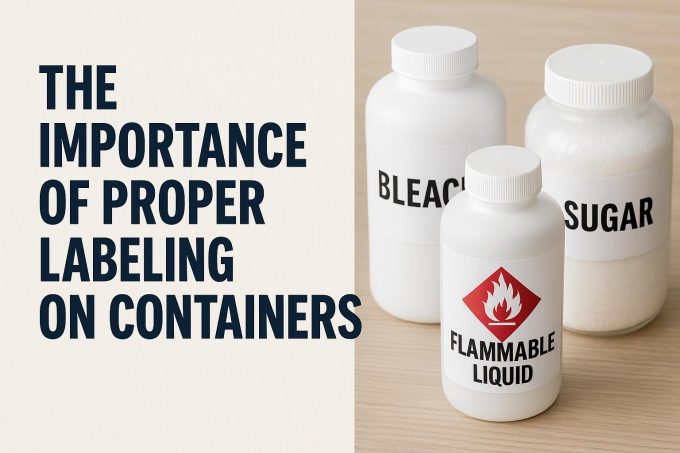
Understanding the Significance of Proper Labeling on Containers
Proper labeling on containers is a critical component in various industries, ensuring safety, compliance, and efficiency. Whether in manufacturing, logistics, or pharmaceuticals, accurate labeling plays a pivotal role in preventing errors and maintaining standards. This comprehensive examination of proper labeling underscores its multifaceted importance and illustrates how it underpins critical operational success across diverse sectors.
Enhancing Safety
Safety remains a primary concern in environments that handle chemicals, pharmaceuticals, or hazardous materials. In such scenarios, incorrect or missing labels can lead to significant risks, including dangerous mishandling, which results in accidents or health issues. Proper labels provide essential details such as content identification, hazard warnings, and handling instructions that ensure the safety of workers and consumers alike.
The impact of failing to appropriately label containers extends beyond immediate safety concerns. If individuals are unaware of a container’s contents, the potential for incorrect usage increases, exacerbating risks. For instance, in chemical industries, incorrect labeling could lead to the mixing of incompatible chemicals, potentially causing hazardous reactions. Similarly, pharmaceuticals demand precise labeling to avoid dosage errors, which can be life-threatening.
Specific Requirements for Safety Labels
Safety labels include multiple components that must adhere to specific standards. Labels frequently feature symbols, such as those outlined in the Globally Harmonized System of Classification and Labelling of Chemicals (GHS), to ensure international understanding. Clear text explanations accompany these symbols, detailing the nature of hazards, precautions, and first aid measures. Thus, these standardized labels play a crucial role in averting risks by providing universally comprehensible instructions.
Ensuring Regulatory Compliance
Many industries are governed by stringent regulations regarding packaging and labeling. Compliance with these regulations is non-negotiable, as an inability to conform can lead to legal repercussions and financial penalties. Proper labeling ensures that companies remain within the boundaries of legal requirements, particularly in fields like pharmaceuticals, where the U.S. Food and Drug Administration enforces rigorous standards.
Adhering to Industry-Specific Regulations
Each industry has specific regulations dictating labeling protocols. In the food industry, the necessity for accurate ingredient lists aligns with consumer safety and informed decision-making. In logistics, labels must meet standards for transport documentation to comply with international trade laws. Pharmaceutical labels, fundamentally, must conform to standards protecting public health by preventing misprescription and ensuring drug integrity.
Failure to comply with these labeling requirements carries distinct consequences. Financial penalties are common and can arise from breaches of regulatory frameworks. Furthermore, compliance lapses can undermine brand reputation, affecting consumer trust and company competitiveness in the long run.
Pursuing Quality Control
In industries such as food and beverage, accurate labeling is indispensable for quality control. Labels must convey comprehensive product information, including ingredients, nutritional values, and expiration dates. Inaccuracies can lead to consumer dissatisfaction or health issues. By adhering to proper labeling practices, companies ensure transparency and build trust with their customers.
Transparency and Consumer Trust
The essence of quality control in labeling rests on transparency. Consumers expect honesty regarding product contents and quality standards. This transparency not only protects consumers from potential allergens or dietary infractions but also enhances the company’s credibility. Trust is fostered when consumers can consistently rely on the accuracy of labels.
Furthermore, detailed labeling supports informed consumer choices. Literature and nutritional information allow consumers to select products that align with dietary needs or ethical considerations, promoting consumer autonomy and positive brand perceptions.
Facilitating Efficient Supply Chain Management
Labels play an essential role in supply chain management by providing critical information necessary for logistics processes. From barcode labels that facilitate inventory tracking to shipping labels specifying destination and handling instructions, efficient labeling practices enhance the coordination and speed of supply chain operations.
Optimizing Supply Chain Processes
Efficient labeling systems bring several benefits to supply chain operations. Firstly, they streamline inventory management. Barcodes and QR codes enable precise tracking, facilitating inventory audits, and minimizing shortages or surpluses.
Moreover, shipping labels are crucial for smooth logistical operations. Labels with explicit handling instructions and destination details reduce errors in transport, ensuring timely and accurate delivery. Thus, incorporating robust labeling practices helps prevent disruptions in the supply chain and supports cost-effective management strategies.
Conclusion
In conclusion, proper labeling on containers serves vital functions across numerous sectors. By promoting safety, ensuring compliance, and facilitating efficient operations, well-executed labeling practices contribute to an organization’s overall success.
Nonetheless, labeling must be viewed not merely as a regulatory requirement. It should be seen as a strategic advantage that supports operational efficiency, bolsters brand reputation, and safeguards stakeholders. Investing in accurate and clear labeling systems is essential for any organization striving for excellence and sustained growth.