
The Evolution of Container Tracking
The transportation and logistics industry has been witnessing a rapid transformation, primarily driven by technological advancements. One of the most notable developments in this domain is the incorporation of RFID technology in container tracking. Radio Frequency Identification, commonly known as RFID, has become integral in refining operations, bolstering security, and elevating efficiency within the supply chain.
Understanding RFID Technology
RFID technology utilizes radio waves to capture and read data stored on a tag attached to objects. These RFID tags can be read from distances of several meters, significantly improving the efficiency of data capture. Unlike barcode systems, which require a direct line of sight for scanning, RFID systems allow for uninterrupted and seamless data collection, enhancing operational fluidity.
The Mechanics Behind RFID
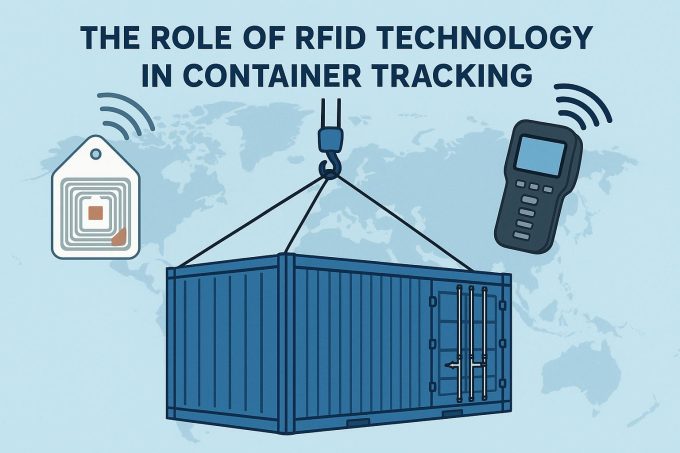
An RFID system generally comprises three primary components: an RFID tag, an RFID reader, and a data processing system. RFID tags house a microchip and an antenna, facilitating data transmission to the reader. The reader, usually connected to a computer, processes and utilizes the data for purposes such as tracking and management. This combination of components ensures that data related to the movement and status of containers is accurately and quickly relayed to pertinent systems.
Types of RFID Tags
In the context of container tracking, RFID tags are predominantly classified into active and passive types. Active RFID tags are equipped with an internal power source, enabling them to transmit information over extended distances, which is especially beneficial for long-range tracking. This makes them ideal for monitoring containers that travel vast distances. Conversely, passive RFID tags lack an internal power source and instead, depend on the energy emitted by the RFID reader to transmit data. Given their shorter transmission range and reduced cost, passive RFID tags are often employed in smaller scale operations.
The Role of RFID in Container Tracking
Shipping and logistics entities experience substantial benefits from implementing RFID technology due to its ability to enhance transparency and streamline supply chain processes. The specific roles that RFID technology plays in container tracking include:
Improved Visibility and Accuracy
Through RFID technology, stakeholders gain real-time insight into the tracking of containers, thus receiving accurate and up-to-date data on cargo location and status. This elevated visibility reduces the risk of containers being lost or misplaced, which in turn significantly boosts logistical efficiency.
Enhanced Security
Security within the supply chain is markedly improved through RFID systems, which monitor the access and handling of containers. Such monitoring is essential for preventing unauthorized entry and potential theft. Moreover, RFID can seamlessly integrate with existing security systems to automatically trigger alerts if instances of tampering or unexpected movement occur in container handling.
Increased Efficiency in Operations
The automation facilitated by RFID technology minimizes the need for labor-intensive manual data entry. By doing so, it considerably reduces human error and accelerates processes such as inventory management and shipment processing. This improved efficiency is vital in busy port environments, where quicker handling times can result in lower operational costs.
Cost-effectiveness
The initial costs associated with setting up an RFID system may appear substantial, however, the longer-term advantages frequently surpass these initial investments. Greater accuracy, minimized losses, and increased efficiencies ultimately translate into significant savings, financially benefiting the shipping and logistics industries.
Challenges and Considerations
Despite numerous advantages, RFID technology in container tracking is not without challenges. Factors such as interference from metal containers and varying environmental conditions can obstruct the precision and efficacy of RFID systems. Additionally, integrating RFID solutions with existing management systems presents complexities that require thorough planning and careful execution to overcome.
Future Prospects of RFID in Container Tracking
Looking ahead, ongoing advancements in RFID technology indicate promising prospects for its role in container tracking. As RFID capabilities evolve to offer longer reading ranges and smaller tag sizes, its applications in the logistics industry appear poised for expansion. Improvements in standardization and decreased costs are projected to boost the adoption rate of RFID systems, paving the way for smarter, more efficient supply chain management.
For readers interested in further exploring the impact of RFID technology on the logistics industry, an informative article provides additional insights.