
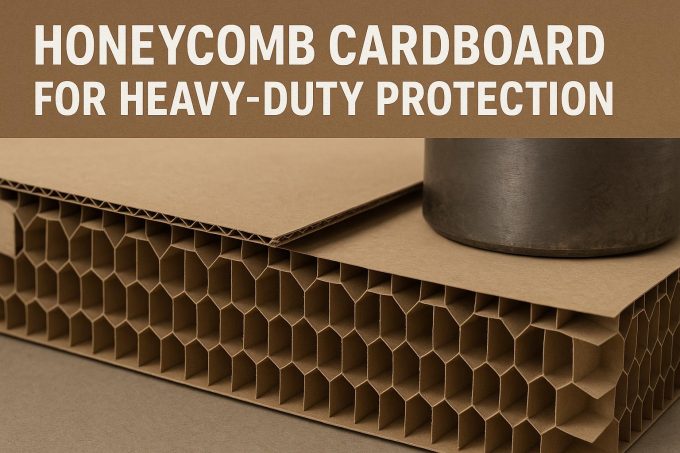
Understanding Honeycomb Cardboard for Heavy-Duty Protection
The use of honeycomb cardboard in packaging and protection solutions is rapidly gaining momentum, particularly for heavy-duty applications. This unique material offers enhanced strength and protection, attributing to its popularity across various industries.
Composition and Structure
Honeycomb cardboard is composed of recycled paper materials formed into a hexagonal, honeycomb-like structure. This configuration is laminated between two sheets of linerboard. The shape mimics the natural design found in bee hives, which is known for its exceptional strength and minimal material usage. This design feature allows honeycomb cardboard to provide robust protection while remaining lightweight.
The hexagonal design is not just aesthetically pleasing; it plays a crucial role in the mechanical performance of the material. Hexagons are recognized for their geometric efficiency in connecting a space, making them ideal for materials used in packaging that require optimal space usage and high durability. The layering of this structure between linerboards enhances the rigidity of the whole setup, allowing it to absorb impacts and withstand pressure without significant deformation.
Advantages of Honeycomb Cardboard
One of the key advantages of honeycomb cardboard lies in its strong compression resistance and excellent cushioning properties. These characteristics make it an ideal choice for protecting goods during transportation and storage. Its lightweight nature also plays a significant role in reducing shipping costs, proving beneficial for logistics and supply chain processes.
In addition, honeycomb cardboard’s insulation properties can also contribute to its utility. It can act as a buffer against temperature variations to some extent, which is essential for certain products sensitive to environmental changes. This property enhances its usability in shipping goods that may require a stable environment.
Furthermore, honeycomb cardboard is an environmentally friendly option. It is recyclable and often made from post-consumer materials, aiding in waste reduction and sustainability efforts. Environmental sustainability is a significant consideration for companies looking to reduce their carbon footprint. As businesses worldwide advance towards eco-friendly practices, materials that boast recyclability and use of recycled components are in high demand.
The production process of honeycomb cardboard itself reflects sustainability. The use of post-consumer materials reduces the need for raw paper production, saving energy and lowering emissions from new material processing. Additionally, this also decreases landfill waste, adding another tick to its eco-friendly credentials.
Applications in Industry
Honeycomb cardboard is widely used across industries such as automotive, electronics, and furniture. In the automotive industry, it often serves as dunnage for shipping parts. Since it can be easily cut into custom shapes and sizes, it proves advantageous for shipping fragile electronic components, providing excellent impact resistance.
In electronics, safeguarding products during transit is paramount due to their susceptibility to shock and static discharge. Honeycomb cardboard’s cushioning capability is highly advantageous in these instances, ensuring devices arrive at their destination intact. Additionally, the capability to tailor the material’s shape supports snug fits and improved product security.
Additionally, furniture manufacturers utilize honeycomb cardboard for its ability to support heavy loads without adding significant weight. This reduces the overall cost and energy consumption in transportation. For furniture, which can vary significantly in shape and weight distribution, the capacity for honeycomb cardboard to be manipulated into protective padding custom-fitted to each part is invaluable.
Furthermore, its use is not only confined to transit protection. Honeycomb structures are also being used within furniture design itself, especially in areas requiring interior support without imposing on weight. This makes the final products easier to handle and reduces shipping complexities.
Challenges and Considerations
Despite its numerous benefits, there are some challenges when using honeycomb cardboard. It may not possess the same level of durability as certain plastic materials. Moreover, its performance can be influenced by environmental factors such as humidity, which may weaken its structure over time.
When exposed to high humidity, the moisture can be absorbed by the honeycomb cardboard, causing it to lose its structural integrity, swell, or in some cases, break down. Therefore, applications in environments that cannot guarantee stable humidity levels might need alternative solutions or additional protective measures to enhance durability.
When considering honeycomb cardboard for heavy-duty protection, it is important to evaluate these factors and select an appropriate grade for your specific application. Another consideration is balancing the cost versus benefit. Although advantageous in many areas, matching the right type of honeycomb cardboard to the specific demands of your industrial circumstances will determine its economic viability.
Moreover, cost analyses should account for the life cycle of materials, ensuring that the sustainability benefits are not undermined by a need for more frequent replacements under harsh conditions. Understanding the limits and potential reinforcements required may help in deriving maximum benefit from this innovative material.
For more detailed information about honeycomb cardboard applications, you may consider visiting this industry-leading resource.