
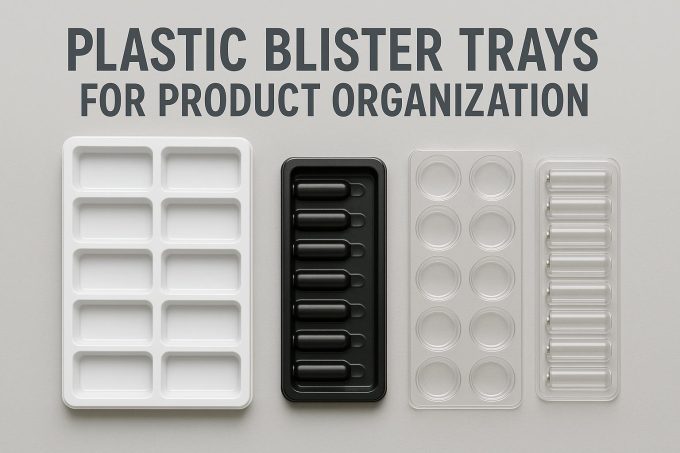
Introduction to Plastic Blister Trays
Plastic blister trays play a pivotal role in the organization, protection, and presentation of products across diverse industries. As a packaging solution, they balance practicality and efficiency, performing an integral function in both logistics and marketing endeavors. Easily adaptable and highly efficient, these trays ensure products are not only protected but remain accessible.
Materials and Design
The choice of material is fundamental in the manufacturing of plastic blister trays, as it determines the tray’s durability, clarity, and ecological impact. Primarily, PVC (Polyvinyl Chloride) is favored for its durability and transparency, offering a robust defense against external elements while allowing clear product display. However, alternatives like PET (Polyethylene Terephthalate) and PS (Polystyrene) are also employed based on specific application needs. PET is often sought for its superior clarity and recyclability, while PS provides affordability and easier forming.
The design of these trays is not restricted to standard models. Customization is pivotal and allows the tray to conform accurately to the product’s dimensions and volume requirements. Precision in design facilitates superior organization and maximizes the protective capabilities of the tray, ensuring products remain stationary and safeguarded from potential harm.
Advantages of Using Plastic Blister Trays
Embracing plastic blister trays for product packaging and display stretches beyond mere convenience; it spans into ensuring product longevity and enhancing consumer appeal. Below are the salient advantages:
1. Protection: Foremost in their function, these trays offer a shield against dust, moisture, and physical impacts. This resilient barrier is crucial in supply chains where products undergo significant handling and in environments where conditions may compromise product integrity.
2. Versatility: Plastic blister trays showcase an impressive versatility. They are crafted in various configurations, accommodating an array of products from diminutive electronic elements to more substantial hardware. This adaptability means businesses can tailor trays to their specific needs, ensuring maximum functional efficiency.
3. Visibility: The use of clear materials ensures that products are easily visible, a crucial aspect that assists retailers in merchandising efforts. Consumers benefit similarly by having a transparent view of the product before purchase, contributing to informed decision-making.
Applications Across Industries
The adaptability and functionality of plastic blister trays see their utilization in several sectors, underlining their importance in modern commerce:
Retail: Across retail domains, these trays are a staple in packaging electronics, toys, and cosmetics. Their contribution to product visibility elevates shelf displays, catching the eye of potential buyers and conveying product details effectively.
Medical: In medical settings, the trays excel in organizing instruments and components. Sterility is paramount, and blister trays ensure that medical tools are kept sanitary and easy to access, reducing procedure time and enhancing efficacy for healthcare professionals.
Automotive: Within the automotive industry, the systematic organization of parts is imperative. Blister trays are frequently employed for their ability to secure component parts efficiently, thus minimizing risks associated with part misplacement or damage, and optimizing inventory management processes.
Environmental Considerations
Amid growing environmental concerns, the evolution of eco-friendly blister trays reflects a significant stride towards sustainability. Manufacturers are increasingly drawn to innovations in the use of recycled materials and biodegradable plastics, alongside enhancements in recycling methodologies.
These environmental considerations are not merely trends but a response to an urgent need for sustainable practices. As businesses integrate ecological goals into their operational strategies, they benefit not only the environment but also enhance their public image, aligning them with a socially conscious consumer base.
Exploration of sustainable packaging solutions can provide a competitive edge, with industry resources such as trade publications and manufacturer support offering insights into the latest developments and technologies. Companies are encouraged to investigate [industry-specific websites](https://www.packagingdigest.com) for comprehensive insights and future advancements in packaging technology.
In conclusion, plastic blister trays remain a cornerstone of product packaging across industries. Their capacity to protect, display, and organize offers profound value, especially when aligned with evolving sustainability goals. The selection of appropriate materials and designs, combined with environmentally conscious production practices, can significantly enhance both functional efficacy and ecological responsibility.