
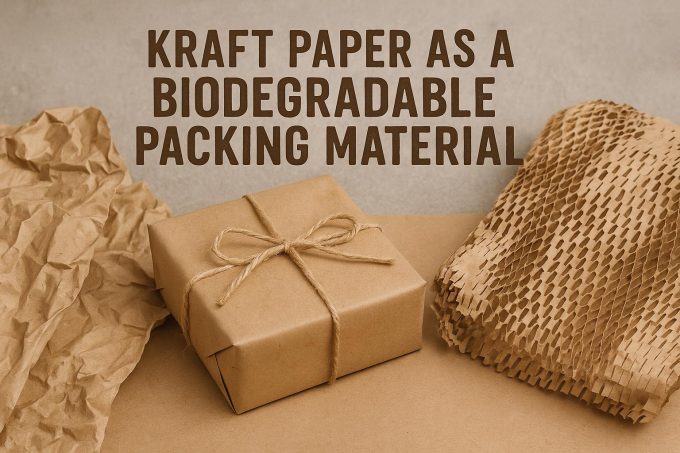
Understanding Kraft Paper as a Biodegradable Packing Material
Kraft paper has garnered considerable attention in recent years for being a sustainable and biodegradable option in the realm of packing materials. Its lineage dates back to the initial stages of the pulp and paper industry development, and it continues to be a popular choice due to its environmental compatibility and functional versatility.
What is Kraft Paper?
Kraft paper is primarily produced from chemical pulp, which is derived through a unique process known as the kraft process. The term “kraft” originates from the German language, translating to “strength,” a fitting description given kraft paper’s durability and resilience. This inherent toughness makes kraft paper an excellent material for packaging and shipping, standing up well to the demands of these applications.
The Manufacturing Process
The kraft process is a sophisticated method involving the treatment of wood fibers with an amalgamation of heat, chemicals, and pressure. This treatment efficiently breaks down lignin, the substance that binds fibers together, thereby enabling the production of a robust yet lightweight paper. Significantly, the kraft process is designed to be sustainable; it allows for the recycling of the chemicals used during production and facilitates the effective recovery of lignin. Consequently, when compared to other traditional papermaking techniques, the kraft process can be viewed as more environmentally sustainable.
Biodegradability and Environmental Impact
One of kraft paper’s primary advantages over conventional plastic packaging is its biodegradability. Biodegradability is defined as a material’s ability to decompose naturally, aided by microorganisms. Under optimal conditions, kraft paper can break down within weeks or months, leaving minimal environmental footprint.
A pivotal element that contributes to kraft paper’s environmental merit is its derivation from renewable resources. Trees grown in sustainably managed forests provide the raw material, ensuring that the production of kraft paper supports ecological balance. With growing awareness among both organizations and consumers regarding environmental issues, there is an increasing preference for sustainable packaging alternatives such as kraft paper.
Applications of Kraft Paper
The versatility of kraft paper allows it to be employed across numerous industries. It serves in various capacities, such as wrapping products or as void-fill in shipping boxes. Because of its considerable strength, kraft paper is commonly used for manufacturing a range of packaging solutions such as paper bags, corrugated boxes, and envelopes. Additionally, kraft paper finds applications in creative sectors, proving to be a favored medium for arts and crafts projects.
Customizability and Practicality
In addition to being environmentally friendly, kraft paper’s potential for customization enhances its utility as a packaging material. One of its key advantages is the ability to easily print logos, product information, or branding messages onto the surface. This attribute makes kraft paper an advantageous choice for companies looking to enhance their marketing efforts while staying sustainable. The market offers kraft paper in multiple grades and finishes, allowing it to be specifically tailored to meet diverse packaging needs, which adds to its practicality.
Considerations and Challenges
Despite its many advantages, kraft paper does confront some limitations and challenges. For example, it does not possess the same level of water resistance as some other materials, which might necessitate supplemental treatments or coatings to improve its performance in certain scenarios. It remains imperative that any coatings used preserve the eco-friendly nature of kraft paper to not compromise its sustainability benefits.
Kraft paper emerges as a formidable option within the sphere of biodegradable packing materials. As the demand for environmentally preferable packaging grows among businesses and consumers, kraft paper’s role is likely to broaden, highlighting both its environmental and practical advantages in the sector. For more on sustainable packaging materials, visit The Sustainable Packaging Coalition.
A Broader Perspective on Sustainable Packaging
The increasing emphasis on sustainable practices has propelled materials like kraft paper to the forefront of packaging innovations. As industries reflect on the ecological implications of their practices, kraft paper’s development signifies a broader shift towards more responsible solutions. Packaging not only plays a critical role in protection and marketing but also in representing an organization’s commitment to a sustainable future. For businesses and consumers striving to lessen their environmental impact, materials such as kraft paper offer viable pathways to balance efficiency with environmental responsibility.
Evolving consumer expectations surrounding sustainability continue to drive market trends, impacting the demand for eco-conscious products. This movement aligns with a global push towards reducing waste and fostering a circular economy where materials are continuously repurposed, recycled, and utilized efficiently. As enterprises adapt their supply chains to include such sustainable materials, the impact of these efforts on reducing environmental footprints will unfold, paving the way for continued innovation and progress in the realm of sustainable packaging.