
Introduction
Styrofoam, commonly known as expanded polystyrene, has been a staple in industries ranging from food packaging to construction due to its lightweight and effective insulating characteristics. However, the environmental repercussions of Styrofoam usage, such as its non-biodegradable nature and the pollutive aspects of its production, highlight the urgent need to identify and develop more sustainable alternatives. In this discourse, we will explore several eco-friendly options that have emerged as viable substitutes for Styrofoam across a variety of applications.
Biodegradable Packing Peanuts
The market for packaging materials has seen significant innovation, and biodegradable packing peanuts have emerged as a credible alternative to traditional polystyrene variants. Originating from natural and renewable resources such as corn starch or sorghum, these packing peanuts boast the capability to dissolve in water, thereby allowing for a much quicker decomposition process. This characteristic not only alleviates environmental waste challenges but also minimizes long-term ecological impact. Their production bypasses the use of harsh chemicals associated with traditional polystyrene, which significantly reduces their carbon and environmental footprints.
Mushroom-Based Materials
The adoption of mushroom-based materials is setting new professional benchmarks for sustainability in the packaging industry. Composed from agricultural waste products and mycelium—the vegetative part of a fungus—these materials are gaining traction not only for their green credentials but also for their practical applications. Upon exposure to environmental conditions, mushroom-based materials break down entirely, leaving no lasting residue. This makes them an attractive choice for eco-conscious companies looking to maintain performance standards akin to those of Styrofoam while appreciating the benefits of a reduced ecological impact. The use of agricultural waste in their production additionally highlights the circular economic principles of this innovative material.
Bamboo Fiber Packaging
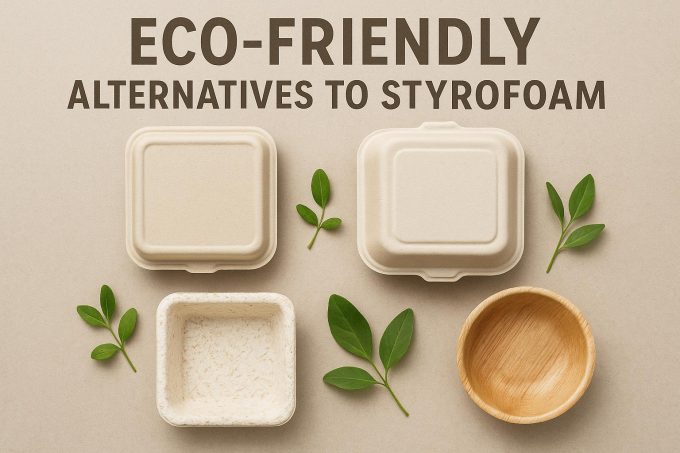
Bamboo fiber has risen as an increasingly popular material due to its rapid renewability and versatility. This resource can be cultivated at a quick pace without the need for pesticides or fertilizers, further emphasizing its sustainable profile. When processed into packaging, bamboo fiber serves as a robust alternative to Styrofoam, especially within the food service industry. Its naturally resilient and compostable properties make it an environmentally responsible choice. Bamboo’s adaptability in various forms, from food trays to take-out containers, underscores its utility and the potential to significantly diminish reliance on traditional, less sustainable materials.
Recycled Paper Products
Recycled paper stands as a stalwart in the effort to create sustainable packaging solutions. By repurposing existing materials, recycled paper products reduce the need for virgin resources, conserving the environment in the process. Such products can be engineered to mimic the form and protective capabilities of Styrofoam, making them suitable for a wide array of packaging applications. In addition to their protective versatility, the recyclability of paper products means that they can reenter the manufacturing cycle again and again, cutting down on waste and fostering a more circular economy.
Conclusion
Transitioning towards more sustainable alternatives to Styrofoam is an essential step in our continuous journey towards reducing our environmental impact and fostering a more sustainable planet. Fortunately, there are a number of promising options available, including biodegradable packing peanuts, mushroom-based materials, bamboo fiber packaging, and recycled paper products, that do not compromise on quality or functionality. As consumer awareness rises and technology progresses further, these alternatives not only offer viable substitutes for traditional Styrofoam but also help industries devise environmental strategies that significantly reduce their ecological footprints. By making these conscious choices and adopting greener practices, businesses and consumers alike can contribute to the prevailing efforts for a healthier, more sustainable world.