
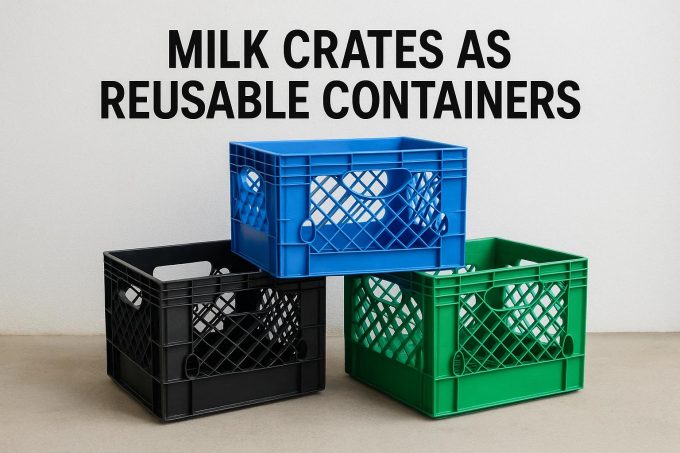
Understanding Milk Crates as Reusable Containers
Milk crates have long been an integral part of the dairy industry, primarily utilized for transporting milk bottles. Over time, their potential as reusable containers has expanded into various other applications. These robust and versatile items are now commonly used in homes, businesses, and educational institutions.
Material and Design
Milk crates are typically made from high-density polyethylene (HDPE) or polypropylene. These materials offer exceptional durability and strength, essential qualities for repeat use. The design of milk crates is characterized by interlocking features, which enable them to be easily stacked. This is particularly advantageous for storage and transport. Both types of plastic materials offer resistance to weathering and chemical exposure, making them suitable for both indoor and outdoor use. Their standardized sizes facilitate easy stacking and storage, ensuring efficient space utilization. This kind of structural integrity not only supports heavy loads but also prevents deformation over time, adding to their longevity.
Moreover, the design includes openings that allow for visibility of the contents, facilitating easy identification of stored items. Handles are typically incorporated into the design to ensure easy handling, enhancing transport efficacy and user convenience. The uniformity in size across different manufacturers allows for seamless integration into any logistical framework, supporting both traditional and innovative storage solutions.
Environmental Benefits
Utilizing milk crates as reusable containers promotes environmental sustainability. By reducing reliance on single-use packaging materials, milk crates help minimize waste. Additionally, the durability of the materials ensures that these crates do not require frequent replacements. This longevity contributes to decreased material consumption and reduces the overall impact on landfills. In addition to mitigating waste, the manufacturing of milk crates from recyclable materials further aligns with eco-friendly practices. HDPE and polypropylene are both recyclable, meaning that at the end of their life cycle, milk crates can be processed for reuse, thereby creating a closed-loop system that conserves resources.
Furthermore, the robustness of these containers means they can be used significantly longer than many other materials, extending usage greatly before recycling is required. This extended lifespan makes them a cost-effective solution for businesses and individuals alike who are conscious of their environmental footprint. As industries strive to adapt more sustainable practices, the role of milk crates in waste reduction is increasingly acknowledged, with their use often highlighted as a simple yet impactful strategy for waste management.
Versatility in Use
Milk crates are employed in a wide array of scenarios beyond just the transportation of dairy products. In homes, they are often repurposed for storage, providing a sturdy solution for organizing books, toys, or tools. Their ability to be easily stacked and reconfigured allows homeowners to customize storage solutions based on their specific needs. For example, milk crates can be stacked to form shelving units in garages or basements, offering flexible storage options that can be adjusted as needed.
For businesses, milk crates serve as an effective means of organizing inventory in warehouses. Their durability ensures they can withstand heavy load handling and movements within a storage facility. In distribution scenarios, milk crates can be used for transporting smaller goods between locations reliably without the risk of damage to the contents.
In educational settings, they are frequently used to store sports equipment or classroom materials. Their portability makes it easy for educators to transport supplies between different areas of a school. Also, in spontaneous learning environments or outdoor classroom settings, milk crates can be utilized as seating, demonstrating yet another facet of their versatility.
Adoption in the Retail Sector
Retail establishments have recognized the benefits of using milk crates for stock management. Their stackable nature allows for creating easily navigable storage solutions. Retailers often establish vertical storage systems using milk crates, which can aid in maximizing the use of space in stock rooms and warehouses. This stacking ability allows for quick retrieval and returns of items, enhancing efficiency in inventory management.
Some retailers even utilize milk crates as display units, offering an industrial aesthetic while remaining functional. This dual purpose not only maximizes the utility of each crate but also contributes to a unique store atmosphere, which can appeal to customers looking for environmentally conscious businesses. By using milk crates to display bulk items or produce, retailers also demonstrate transparency and practicality, further engaging customers and promoting a sense of sustainability.
Moreover, the uniformity of milk crate dimensions ensures that they can be integrated into both existing and newly designed retail environments with ease, making them a flexible solution for businesses undergoing expansion or renovation.
Conclusion
Milk crates offer a sustainable, efficient, and versatile solution for various storage and organizational needs. Their robust construction and adaptability make them an increasingly popular choice for individuals and industries aiming to enhance their environmental responsibility. As the global conversation around sustainability continues to grow, the role of reusable, durable containers such as milk crates gains prominence. By choosing such items, businesses and homeowners can contribute to reducing waste and conserving resources, reflecting a broader trend towards environmentally responsible consumption and production. For further reading, explore articles on sustainable packaging (here) and the impact of reusable containers on waste management (here).