
Introduction to Non-Woven Fabric Containers
Non-woven fabric containers provide a versatile and economical solution for storing lightweight items. These containers are crafted from fabric-like materials that are not woven or knitted, offering unique characteristics suitable for a variety of applications. In an increasingly eco-conscious world, their usage is on the rise due to their recyclability and biodegradability.
Understanding Non-Woven Fabric
Non-woven fabric refers to materials made from fibers bonded together through chemical, mechanical, heat, or solvent treatment. Unlike traditional fabrics, these fibers are not interwoven but are instead pressed together to form a flat, flexible sheet. This manufacturing process gives non-woven fabrics distinct advantages, including durability, breathability, and water resistance. For a technical understanding of non-woven materials, resources such as the Nonwovens Industry website may be useful.
Attributes of Non-Woven Fabric
Non-woven fabrics are acclaimed for their lightweight yet robust nature, making them suitable for diverse applications. Their inherent properties include flexibility, which allows for easy manipulation during the manufacturing process, and strength that provides reliable support in daily use.
One of the key structural benefits of non-woven fabric is its breathability. Unlike plastic containers, non-woven options permit air circulation, which is particularly advantageous in preventing moisture build-up. Furthermore, these containers offer water-resistance properties, making them suitable for environments where exposure to moisture is a concern.
Applications in Storage and Organization
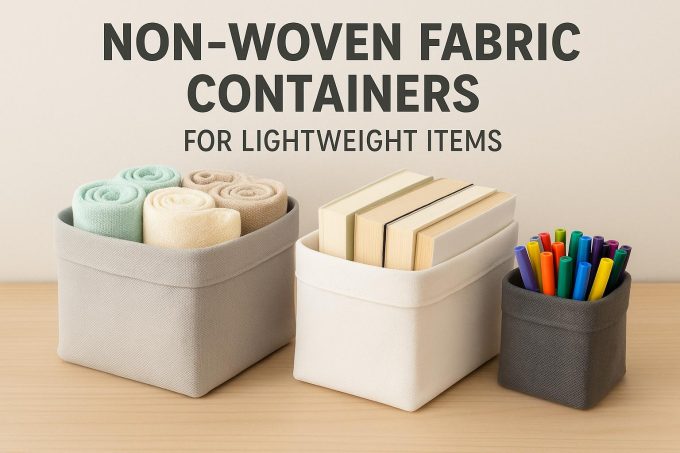
The properties of non-woven fabric make it ideal for containers used in storage and organization. These containers are lightweight yet sturdy enough to hold various lightweight items, such as clothes, toys, and small household goods.
Clothing Storage: Use non-woven fabric bags or boxes to store seasonal clothing. Their breathable nature helps in reducing mustiness and moisture build-up.
Office Organization: Non-woven containers can serve as storage baskets for organizing office supplies, providing a tidy yet accessible way to manage pens, paper, and other items.
Environmental Impact and Sustainability
Non-woven fabric containers are often heralded for their potential in promoting sustainability. Many non-woven materials are made from recycled plastics and can be recycled after use. Additionally, they require less water and energy to produce compared to woven alternatives. Manufacturers often highlight this environmental aspect, making these containers a preferred choice for environmentally conscious consumers.
The Role of Non-Woven Fabric in Reducing Plastic Waste
With global concerns about plastic waste mounting, non-woven fabrics present a viable alternative. Their use in containers reduces reliance on conventional plastics, thereby contributing to the reduction of plastic pollution. By utilizing recycled materials, non-woven fabrics help in lowering the ecological footprint associated with production.
Furthermore, consumers play a significant role in extending the lifecycle of these containers. Recycling non-woven products after use facilitates a circular economy, where materials are consistently reused and repurposed rather than being discarded.
Caring for Non-Woven Fabric Containers
Proper care of non-woven fabric containers will extend their lifespan and maintain their appearance. Here are some basic maintenance tips:
– Avoid Overloading: Non-woven containers have a maximum weight capacity. Avoid overloading them to prevent tearing or deformation.
– Cleaning: Use a damp cloth to wipe the surface and remove any dirt or stains. Avoid soaking the fabric, as excessive moisture can weaken the bonding.
– Storage: When not in use, fold the containers to save space. Store them in a dry and cool environment to prevent mold growth.
Innovations in Non-Woven Fabric Development
Advancements in non-woven fabric technology continually enhance their efficacy and versatility. Research and development in this field focus on improving material strength and moisture resistance while introducing biodegradable options that further minimize environmental impact.
Emerging trends in manufacturing processes are using renewable resources, such as cellulose fibers, to enhance the sustainability quotient of non-woven products. The integration of natural fibers not only supports environmental objectives but also fosters the development of innovative, multi-functional materials.
Conclusion
The use of non-woven fabric containers for lightweight items is a practical and eco-friendly choice that supports efficient organization. With their unique material properties, these containers meet the demands of modern storage solutions, offering durability and ease of maintenance. The ongoing innovations in non-woven fabric technology promise a future where resource efficiency and environmental consciousness align seamlessly. For more information on sustainable storage solutions, organizations like the Sustainable Product World provide valuable insights.